
Glassy-winged Sharpshooter
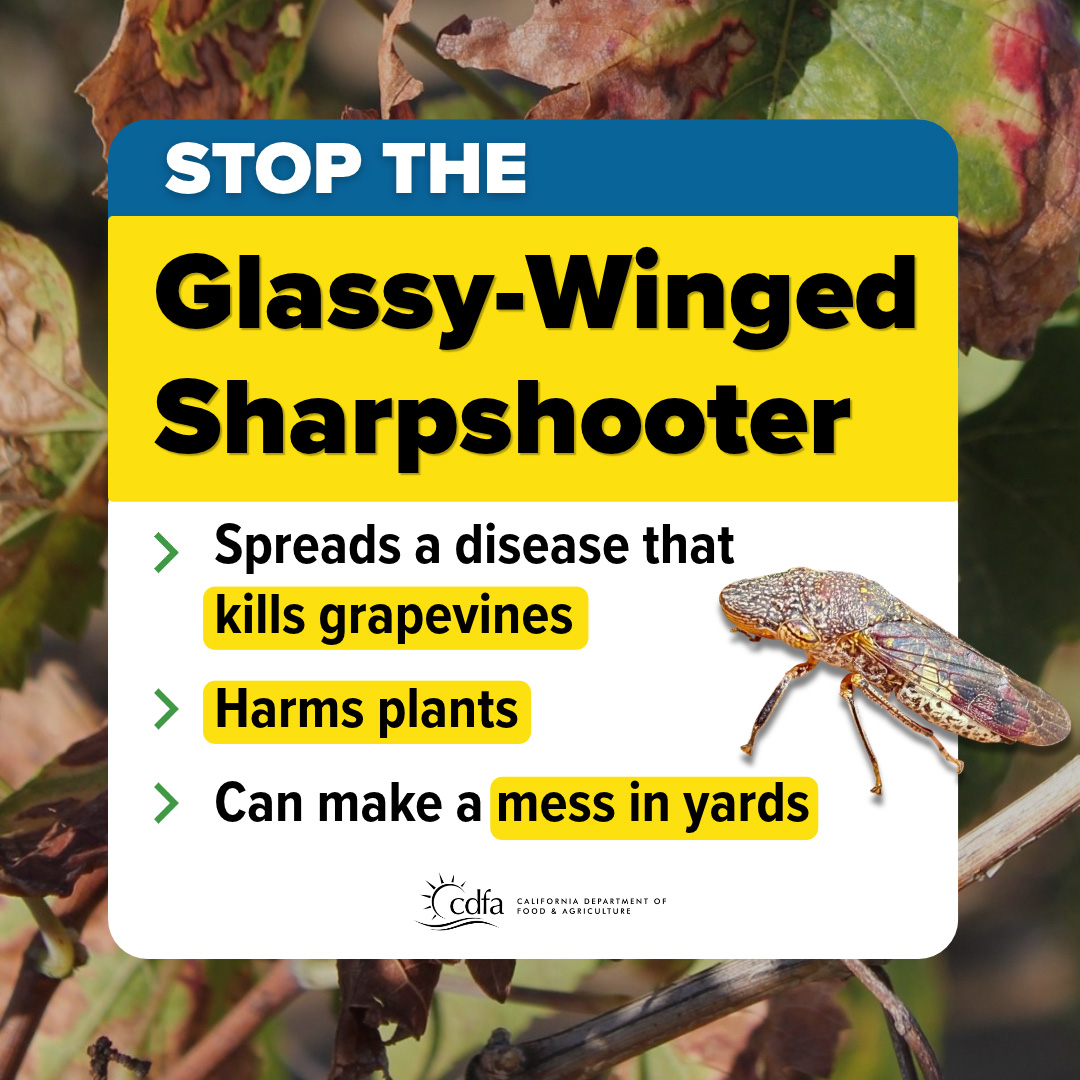
The glassy-winged sharpshooter (GWSS) is an insect that spreads serious plant diseases, including Pierce’s disease, which kills grapevines.
GWSS can be hard and expensive to control, so it’s critical to stop it from spreading beyond Southern California and the southern San Joaquin Valley.
What is GWSS?
- GWSS is an invasive insect that can feed on more than 350 kinds of plants, including grapevines, citrus, fruit trees and common landscape plants.
- It spreads plant diseases that can kill or harm plants.
- It often feeds on plant stems. When approached, it may move around the branch to hide, jump or fly away.
Why is GWSS a problem?
GWSS threatens California neighborhoods, vineyards and agriculture.
GWSS can:
- Spread plant diseases, including Pierce’s disease, which has no cure and can kill grapevines, as well as diseases that harm crops and common yard and landscape plants.
- Hitchhike on plants and fly long distances to spread to new areas.
- Be hard and costly to control, which is why it is better to keep GWSS out of new areas than trying to eliminate it after it becomes established.
- Make messes on plants, fruit, cars, patios and other outdoor surfaces by releasing droplets of sticky liquid when it feeds. The liquid dries white and can stain.
How can I help stop the spread of GWSS?
- Don’t move plants in or out of the area
- Buy plants locally from licensed nurseries or retailers
- Report signs of GWSS to your county agricultural commissioner
- Work with agricultural officials: allow access to your property to place traps, inspect plants and conduct treatments, if needed
How can I spot GWSS?
Adult
GWSS
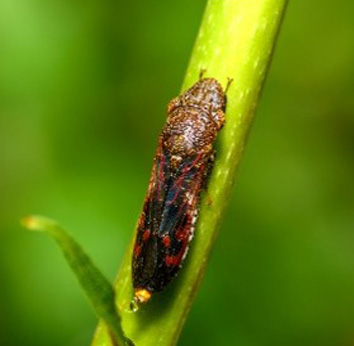
Adults are about ½ inch long, about the size of a dime coin. They have dark brown bodies with clear, glassy wings with red veins.
Young GWSS
(Nymph)
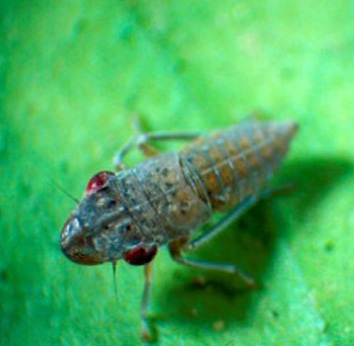
Young GWSS are smaller than adults, don’t have wings and have bulging red eyes.
Egg
Mass
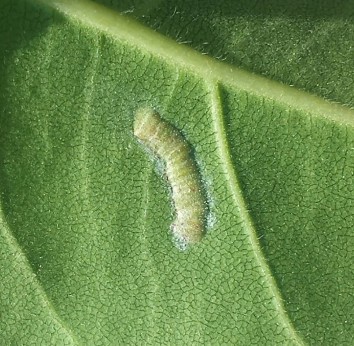
GWSS lay egg masses on the underside of young plant leaves.
Old Egg
Mass
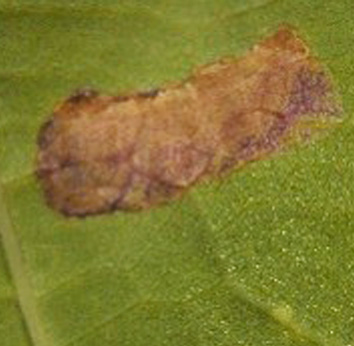
After the eggs hatch, the area around the egg mass turns brown and leaves a permanent scar.
Where do GWSS live?
GWSS can feed and lay eggs on hundreds of host plants.
- Fruit and crops: grapes, citrus, stone fruit, almond and more
- Landscape plants: oleander, crape myrtle, privet and more
- Shade trees: oak, elm, maple, sycamore and more
How is GWSS controlled?
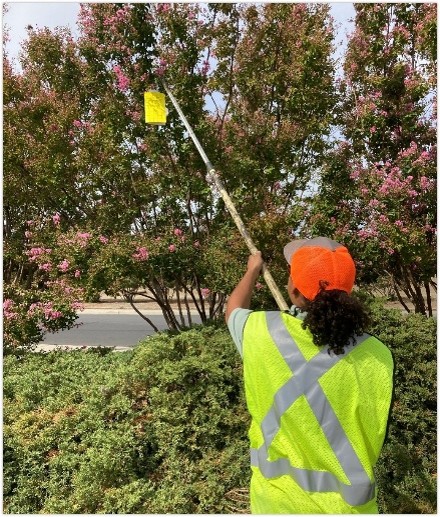
use yellow sticky traps
to monitor for GWSS
Controlling GWSS helps protect California vineyards, crops and other plants from serious diseases. The Pierce’s Disease Control Program (PDCP) partners with local county agriculture departments to contain GWSS with:
- Trapping and monitoring: Traps help officials find and track GWSS populations.
- Inspections and treatments: Officials inspect and treat plants in urban areas and nurseries to lower GWSS populations.
- Shipment inspections: Nursery plants and bulk citrus are inspected and regulated to prevent GWSS from spreading to new areas.
- Biological control: Officials release tiny, harmless wasps to attack GWSS eggs before they hatch.
How can growers protect their vineyards?
- Learn to identify GWSS
- Watch for and report GWSS to your local agricultural commissioner’s office
- Follow current GWSS control recommendations
- Watch for PD symptoms
- Follow disease management guidance, including removing diseased vines