
About the Healthy Soils Program Block Grant
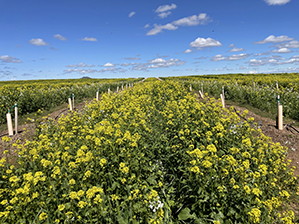
Through the Block Grant model, CDFA's Office of Agricultural Resilience and Sustainability (OARS), partners with regional organizations to administer local grant programs that support farmers and ranchers implementing healthy soils practices.
Block Grant Recipients work directly with producers in their region by providing outreach, technical assistance, and support throughout project implementation. These organizations manage the local application process, recommend projects for funding to CDFA, establish agreements with producers who carry out soil-health practices on their operations, and manage funded on-farm projects.
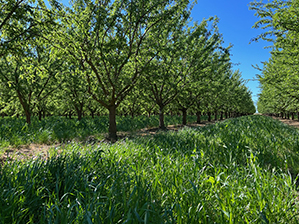
By working through trusted regional partners, the Block Grant model helps ensure funding reaches producers along with locally informed support and technical expertise, thus expanding the adoption of soil-building practices across California.
Important Terminology:
- Block Grant Recipient (BGR) is a regional or specialized organization that receives funding from CDFA to administer a Healthy Soils Program block grant and support producers within their service area.
- On-Farm Grant Beneficiary is the producer. Farmers and ranchers receive funding through their regional Block Grant Recipient to implement approved healthy soils practices on their operations.
Tribal Set-Aside Opportunity
CDFA's Office of Agricultural Resilience and Sustainability (OARS) is committed to supporting projects led by California Native American Tribes.
A tribal set-aside of up to $5 million will be available for Tribal governments and nonprofit organizations affiliated with a Tribal government. Tribes are also eligible to apply through the standard Healthy Soils Block Grant solicitation, although that application process has closed.
OARS is developing details of a Block Grant tailored to Tribes through a tribal consultation process. The Tribal solicitation is expected to be released in early 2027.
To Apply
The Healthy Soils Program has invited selected Concept Proposal Applicants to apply to the Block Grant Full Proposal. Review the following documents listing details of the invited applications, all applications submitted, and other solicitation resources.
On this page:
Block Grants vs. Incentive Grants
Block Grants
- Funding is awarded to partner organizations
- Partners provide technical assistance, outreach, and project support
- These organizations administer local grant programs for producers
- Producers apply for funding through the partner, not CDFA
Incentive Grants
- Funding is awarded directly to farmers and ranchers
- Producers apply directly to CDFA
- OARS is not currently accepting applications for HSP incentive grant and does not plan to offer future solicitations at this time
Block Grant Recipients
Overview of the Block Grant Recipient Role
Block Grant Recipients are responsible for:
- Managing a Healthy Soils Block Grant
- Conducting outreach to farmers and ranchers in their service area
- Selecting and recommending on-farm projects for funding
- Establishing agreements with funded producers (Grant Beneficiaries)
- Supporting project implementation
- Conduct verification and process reimbursements to grant beneficiaries
Block Grant Recipients also coordinate technical assistance to help producers develop, design, and implement eligible management practices.
Eligibility Requirements
Lead Applicant
The following organizations are eligible to apply as a Lead Applicant:
- Public agencies
- Local agencies
- 501(c)(3) nonprofit organizations
- Special districts
- Joint Powers Authorities
- Public utilities and locally owned utilities
- Mutual water companies
- California Native American Tribes
Technical Assistance Providers (TAPs)
Block Grant Recipients may serve as the Technical Assistance Provider Lead Organization if they are eligible under the Canella Environmental Farming Act.
Eligible entities include:
- Resource Conservation Districts (RCDs)
- University of California Cooperative Extension
- California public colleges and universities
- Nonprofit organizations
- Groundwater Sustainability Agencies
- Irrigation districts
Lead Applicants that are not eligible to serve as the TAP Lead Organization may partner with an eligible entity to provide technical assistance.
How to Apply
Organizations interested in administering a Healthy Soils Program Block grant may apply to become a Block Grant Recipient (BGR).
The Lead Applicant is the organization that applies for and, if awarded, receives funding from the California Department of Food and Agriculture (CDFA). As Block Grant Recipients, they enter into an agreement with CDFA to administer a local grant program and distribute funding to producers who implement eligible soil health practices on their operations.
When Block Grant Recipients Can Apply
Estimated Block Grant Solicitation Timeline*:
- Concept Proposal Opens: April 2026
- Full Proposal Notification: July 2026
- Full Proposal Close: August 2026
- Award Notification: September 2026
- Award Execution: January 2027
*All estimates are subject to change.
Block Grant Application Assistance
Webinar Information
HSP and SWEEP offered joint informational webinars to guide prospective Block Grant Recipients through the Concept Proposal application process and address applicant questions.
They were held on April 13 and April 20 via Zoom.
You can watch a recording of the webinar here.
You can access the PowerPoint deck here.
Question and Answer Process
In addition to informational webinars, OARS will offer a question-and-answer process. General questions may be submitted to cdfa.HSP_Tech@cdfa.ca.gov and responses will be standardized and posted to the website according to the timeline below:
- April 17th, 2026 - Question and Answer for April 17th
- May 1st, 2026 - Question and Answer for May 1st
Technical Assistance for Block Grant Applicants
OARS is working with the University of California Agriculture and Natural Resources (UC ANR) Climate Smart Agriculture (CSA) Program to provide technical assistance to Block Grant applicants throughout the application and implementation phases. CSA Community Education Specialists (CESs) across California can support projects that benefit disadvantaged communities (DACs) and vulnerable populations. The CSA Program will also provide technical assistance to awarded Block Grant Recipients, including onboarding, training, outreach planning, application review, producer technical assistance, project implementation and verification, reporting, and demonstration event support, with bilingual and culturally relevant assistance available to improve access and participation. The team can be reached at: climatesmartag@ucdavis.edu.
Producers (On-Farm Grant Beneficiaries)
Who Is Eligible
- Individual Farmers and Ranchers
- Individuals who are 18 years or older and actively engaged in agricultural production, including those operating as:
- Sole proprietors
- Single-member LLCs
- Lessees managing agricultural land
- Individuals who are 18 years or older and actively engaged in agricultural production, including those operating as:
- Agricultural Businesses and Entities
- Businesses or shared property entities engaged in agricultural production that are registered with the California Secretary of State, including:
- Trusts
- Estates
- Partnerships
- Limited Liability Companies (LLCs)
- Corporations, including nonprofit (public benefit) corporations
- Businesses or shared property entities engaged in agricultural production that are registered with the California Secretary of State, including:
- California Native American Tribes
- Federally recognized Tribes
- Tribes listed on the California Tribal Consultation List maintained by the Native American Heritage Commission
Ineligible Applicants
The following individuals or entities are not eligible to receive funding for an HSP on-farm project:
- University farms
- Employees of the individual or entity that owns or leases the land where the project would occur
- Individuals or entities that don't meet the eligibility requirements listed above.
Individuals with a conflict of interest include, but are not limited to:
- Employees of the Block Grant Recipient (BGR) or its contractors or subrecipients
- Members of the BGR Board or other governing body
- Immediate family members (parents, spouses, or children) of individuals involved in funding or award decisions
How to Seek Funding
For Producers: Applying for an On-Farm Grant
Farmers and ranchers seeking funding for Healthy Soils practices will apply through an awarded Block Grant Recipient in their region.
- Identify a Block Grant Recipient (BGR)
Starting January 2027, a list of Block Grant Recipients and their contact information will be available on this webpage.
When selecting a Block Grant Recipient, consider:
- The counties or regions they serve
- Whether they specialize in certain production systems (such as rangeland grazing, orchards, or specialty crops)
- Whether they prioritize funding to specific Healthy Soils practices.
- Request Technical Assistance
Block Grant Recipients provide technical assistance to help producers participate in the Healthy Soils Program.
Technical assistance may be provided by:
- Staff from the Block Grant Recipient organization
- Contractors working with the BGR
- Partner organizations collaborating with the BGR
Support may include:
- One-on-one project development and application assistance
- A pre-award farm visit
- Guidance on practice implementation
- Submit Your Funding Request
When applications open, Block Grant Recipients will provide producers with instructions and a list of required materials to submit. Applications should be submitted to Block Grant Recipients, not CDFA.
CDFA's Office of Agricultural Resilience and Sustainability (OARS) will assist Block Grant Recipients in reviewing projects to ensure:
- The producer or organization meets eligibility requirements
- The proposed project location is eligible for funding
When Producers Can Apply
Producers will not be able to apply for Healthy Soils Program funding until Block Grant Recipients have been selected for award and agreements are executed with CDFA. At this time, execution of Block Grant Recipient agreements is expected in January 2027.
Once Block Grant Recipients are finalized, they will begin administering local grant programs and accepting applications from producers in the regions they serve.
Please note that exact timelines for when individual Block Grant Recipients will open their producer application periods are still to be determined and may vary by organization. Additional information, including a list of awarded Block Grant Recipients and their contact information, will be posted on the Healthy Soils Program webpage as it becomes available.
What Types of Practices Can HSP Fund?
HSP currently supports 29 different practices, offering payments for practices on cropland, orchards and vineyards, and grazing land. Depending on the practice, HSP will provide funding for a one-time implementation or for three years of annual implementation.
Below are some commonly-funded practices with their basic descriptions:
| 3-Year Annual Implementation | ||
|---|---|---|
| Practice | Description | Key Notes |
| Compost Application | Purchased or on-farm compost applied at set ton/acre rates | Must meet carbon: nitrogen ratio requirements |
| Cover Cropping | Single-species or mixed species plantings | May require supplemental irrigation |
| Mulching (Natural Materials) | Organic materials applied to soil surface | Must be produced off-site; flexible reimbursement in some areas |
| No-Till / Reduced-Till | Reduced soil disturbance with residue management | Must be new practice on the field |
| 1-Time Implementation | ||
|---|---|---|
| Practice | Description | Key Notes |
| Hedgerow Planting | Pollinator-friendly plants | Minimum 200 plants/acre |
| Windbreak / Shelterbelt | Trees/shrubs for protection | Minimum 200 plants/acre; size requirements apply |
| Mulching (Wood Chips) | Wood-based mulch application | Must be produced off-site; coverage/depth requirements |
| Whole Orchard Recycling | Orchard biomass incorporated into soil | Trees ≥10 years old; chips incorporated ≥6 inches |
| Range Planting | Establishing vegetation on rangeland | Requires approved species and planting methods HSP technical assistance providers can help prepare plans. |
| Biochar (new) | Soil amendment | Offered in some areas with flexible reimbursement; must be produced off-site |
| Rice Conversion (new) | Land-use change | Eligible only in soils with >20% organic matter |
Compost, woodchip mulching, natural materials mulching, and biochar may be supported by certain BGRs on a capped, invoice-based reimbursement basis, or with direct provision of materials and services, instead of a fixed rate payment. You are advised to inquire with your local BGR about how financial support for these practices will be handled. For the full list of practices, their payment options, and implementation requirements see HSP 2026 Practice Guidelines.
On-Farm HSP Project Requirements and Restrictions
- All practices and plantings must be implemented in soil, and soil cannot be in containers.
- Permanent plantings are to be maintained for 10 years, with irrigation if necessary.
- Each practice has standards that a producer must follow and document when implementing the practice. See the HSP 2026 Practice Guidelines.
- Practices should be new to the field on which they are implemented, unless there has recently been a change of ownership or management.
- Some HSP practices are restricted by geography, topography, or are not allowed to overlap with certain others, for technical reasons. Many of these restrictions are built into the RePlan project design tool.
Program Status
WORKING with invited Concept Proposal Applicants ONLY